Fluorescent lichen
Reflected UV light
I have a mercury vapor lamp that emits UV radiation. It is attatched to my microscope and shines on subjects from the top. There are filters in place to selectively illuminate the subject. The UV radiation excites certain compounds to emit light in the visible spectrum. This visible light is also filtered to select only a range of color. These filters are very expensive and I don’t have a set that can be considered useful for imaging naturally present fluorescent compounds, they are rather used with specific fluorescent dyes, which are also much too expensive. My filters came with my microscope, so I might as well try them out without their dyes. Here are some of the results.
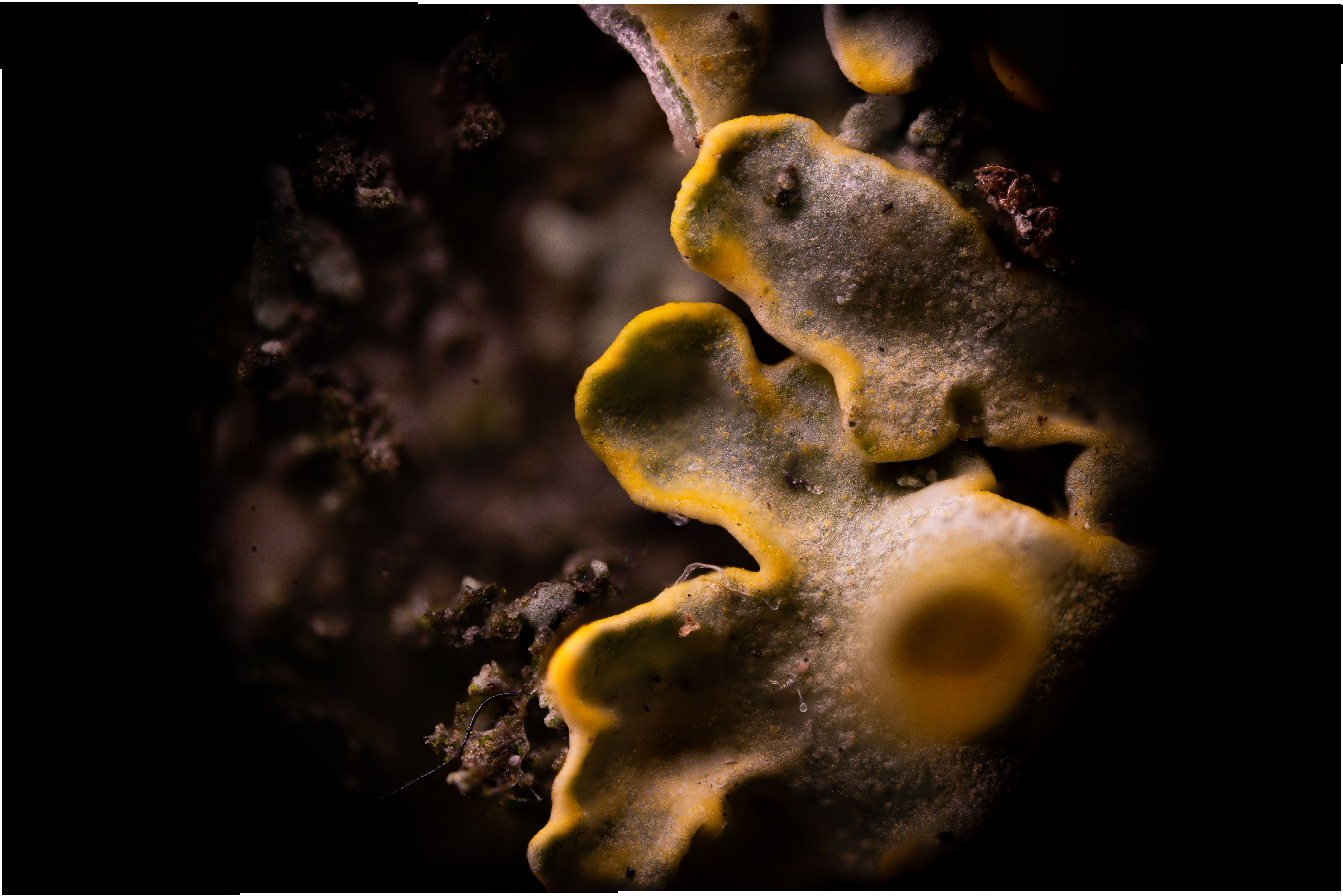
This is the first subject we will illuminate with UV, a lichen growing on a tree in Amsterdam. Let’s switch from LED to UV light:
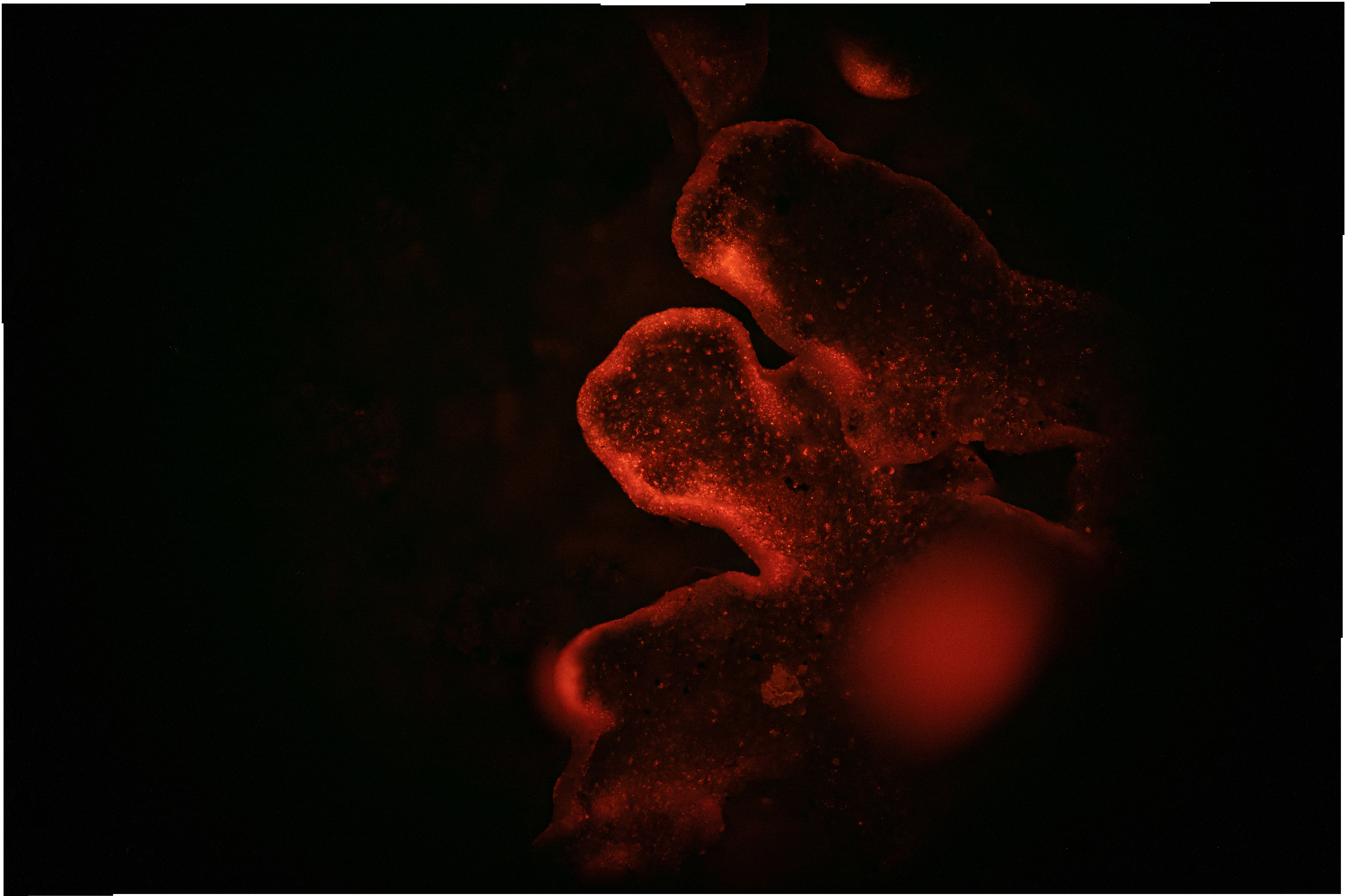
The yellow edge of the lichen is now visible as bright red. Chlorophyll a and b are known to absorb UV from around 400-500 nm and emit red light. It is also these types of chlorophyll that are present in the photosymbionts that are living inside the lichen, so it is possible that we are observing the photosymbionts. The installed filter only lets through a band of light from 530-560 nm, but it is possible the filter has degraded somewhat, or the chlorophyll fluoresces more broadly than I said earlier. Seen in this graph there are a number of absorbtion peaks for chlorophyll a and b.
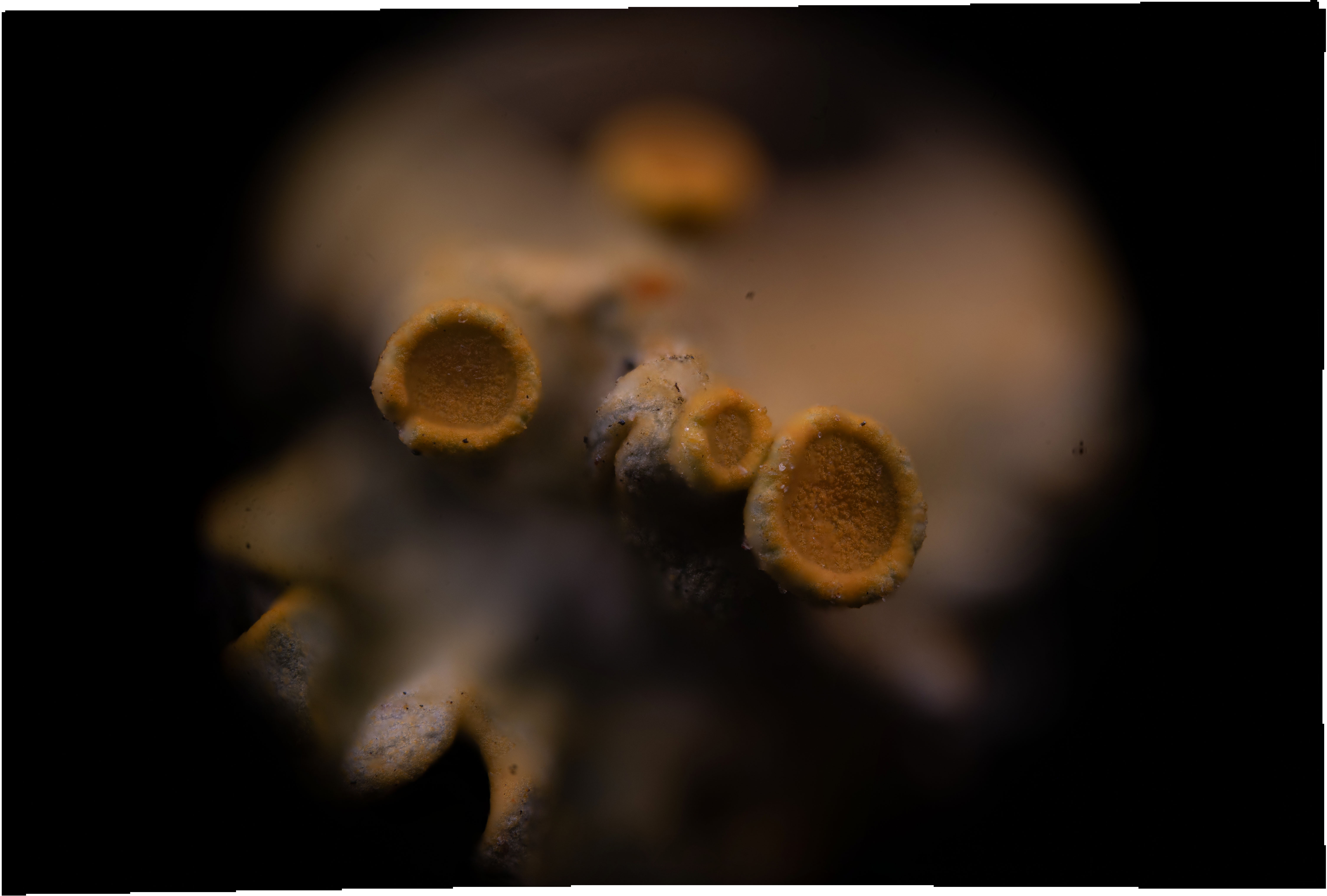
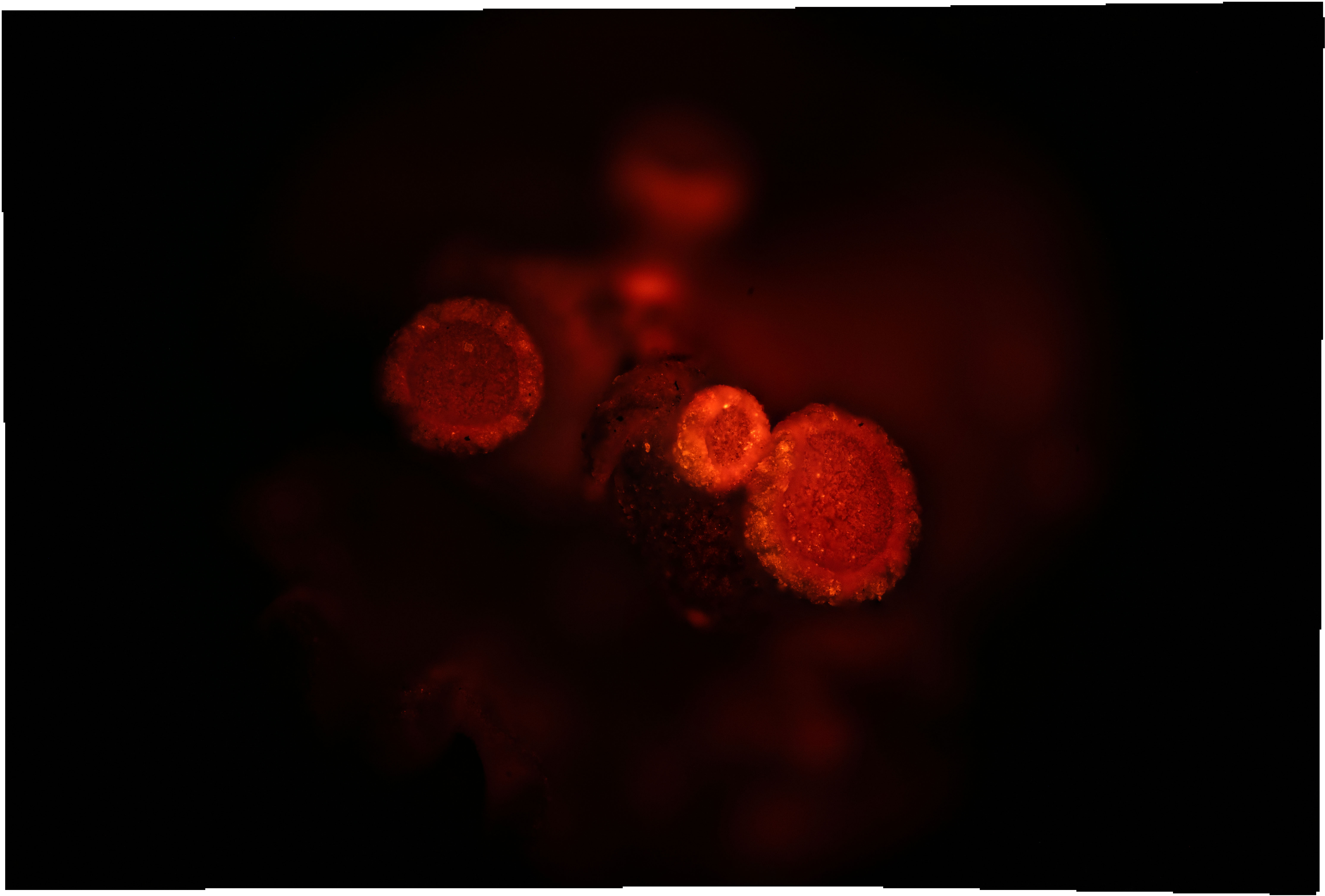
We can see the same thing happen for this subject. Now the whole area that is facing outwards is fluorescing, not just the edge. The hyphal-symbiont matrix must be structured differently here. It is on these round upwards rising limbs that all of the fungal tissue is colonized. We might think of these as solar panels. Shining LED light from above shows little shadow on these surfaces, giving the best oportunities for photosynthesis. I’m sure there is a wall of sophisticated information on the nature of these limbs, who has time to read all that?
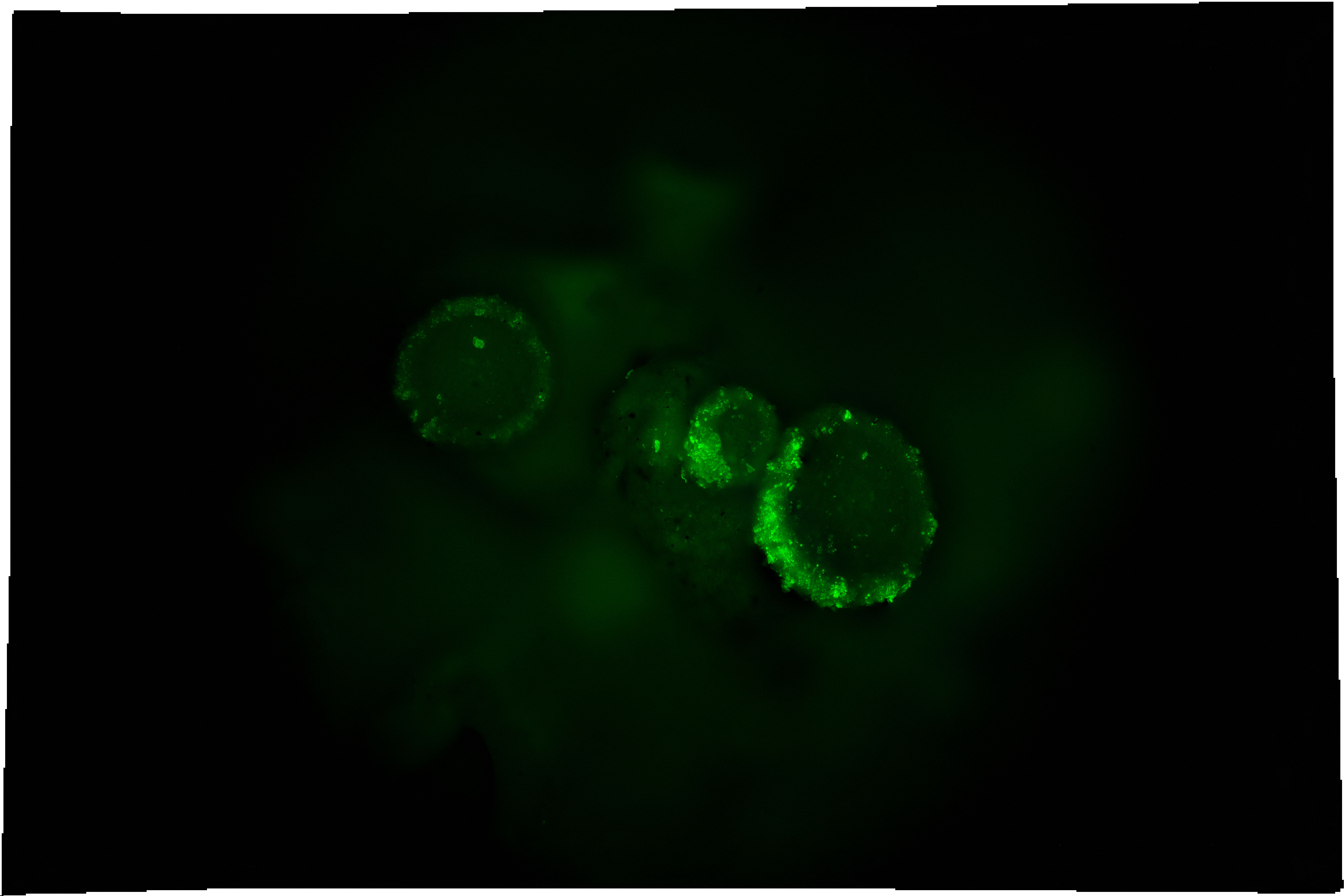
A different set of filters reveals some elements not seen in the previous pictures. Brightly green fluorescing minerals that are deposited on top of rather than embedded in the lichen. It is hard to imagine these have biological origins.